
Career Sharing | Seemingly Cross-Disciplinary, But Actually Connected: From Food to Consumer Health

"Every profession is like a mountain to climb," but in the field of health and wellness, that mountain is disappearing.
Want to switch careers but don't know where to start? Many professionals in their mid-career experience this dilemma. This special feature features Diana Zhu, Head of Innovation Project Management at Auberge China, who shares her career transition from the FMCG sector to the consumer health field.

In this unique market segment, where one foot is in health supplements and the other in over-the-counter drugs, Diana has observed the blurring of industry boundaries, the shift in consumer perception, and the market being reshaped by the "life-saving" logic in the post-pandemic era.
The increasingly blurred boundaries between food and medicine and the trend of integration are becoming a boon for cross-industry collaboration.
Diana started in traditional food science and worked in Australia for nearly ten years in food quality management (QC/QA) and product management. In 2020, she chose to return to China and enter the new field of consumer health.
“I haven’t completely switched to traditional medicine, such as prescription drugs or vaccines. My current position is more like a middle ground, with one foot in health supplements and the other in over-the-counter drugs,” Diana laughed.

In her view, the boundaries between the food and health industries have become increasingly blurred over the past five years, especially after the pandemic. The traditional food industry has begun to actively explore functional ingredients, hoping to give products more health attributes. At the same time, consumer psychology has undergone profound changes: "The pandemic has made everyone more 'careful of their lives'."
This is also the cornerstone of her successful entry into the health and wellness industry as a professional with a food technology background: the food and health industries are rapidly converging. However, even with favorable timing and circumstances, crossing over is not without its barriers. For Diana, the biggest challenge came from the difference in the underlying logic of the industries, which was directly reflected in the misalignment of understanding regarding team composition and timelines.
Diana explained that the Consumer Health team is extremely diverse, with members coming from food, cosmetics, fast-moving consumer goods, or even rigorous traditional pharmaceutical companies. These background differences lead to clashes in their working approaches.
“The most typical example is the difference in understanding of the R&D cycle.” Diana gave an example: In the food industry, a new product can go from concept to market in less than a year; but in the pharmaceutical field, even for over-the-counter drugs without changing the formula, the market launch cycle can be as long as three to five years, and for new drug development, five to ten years is also very possible.
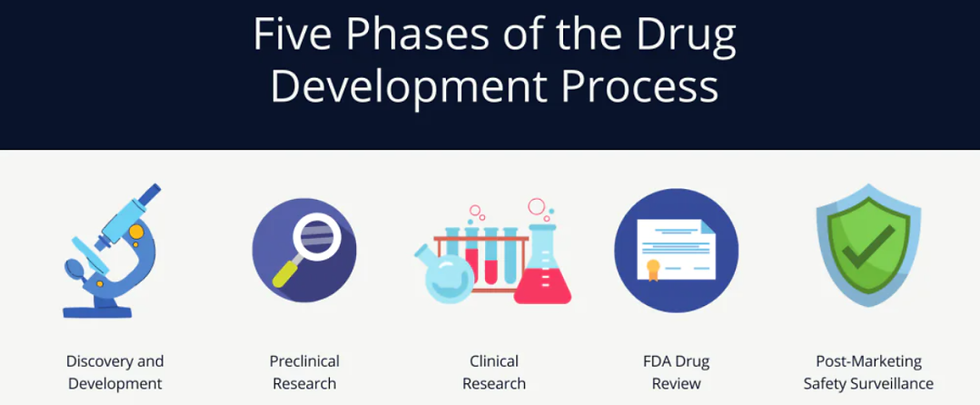
As her work progressed, Diana gradually understood the logic behind the "slow" approach: whether it's prescription or over-the-counter drugs, life safety is at stake, and no error is permissible in any of the chain nodes, including risk control, compliance requirements, and toxicological validation. This also places extremely high demands on project management.
The pandemic has reshaped consumer psychology, and the industry urgently needs to "dehydrate" and upgrade.
Diana observed that post-pandemic anxiety about the unpredictability of life has driven consumer demand towards health management. However, the concurrent economic downturn has led to higher consumer expectations for products and lower budgets.
“Previously, consumers might have had two budgets: one for emotionally appealing foods that made them happy, and the other for health products. Now, many people may only have one budget left, which forces them to be very pragmatic in their decision-making. For example, in the past, people would be satisfied with spending 70 yuan on something worth 70 yuan; now, if they spend 70 yuan, they will expect to get products with higher value or better value for money,” Diana analyzed.

Rising upstream raw material costs and extremely price-sensitive, quality-demanding downstream consumers have presented significant challenges to the entire industry. Faced with this structural pressure, Diana believes the market is undergoing a process of "squeezing out excess liquidity."
"After the market's rapid changes, those who are truly dedicated to making quality products and possess core competitiveness will remain. For us in the industry, this means a lower margin for error and higher standards of professionalism. In the turbulent market, only by abandoning superficiality and returning to the essence of the product can we weather the cycles," Diana said.


Comments